Showing posts with label Otto Warmbier. Show all posts

January 30, 2023

Remembering Otto Warmbier

By Robert Collins

January 30, 2023


Just before Christmas 2022, President Joe Biden signed into law the 2023 National Defense Authorization Act, which included the “Otto Warmbier Countering North Korean Censorship and Surveillance Act.” The law “authorizes $10 million annually for the next five years to counter North Korea’s repressive censorship and surveillance state.”

Otto was imprisoned and tortured by the Kim regime for reasons that seem petty to almost all of us, but were taken exceedingly seriously by the Korean Workers’ Party (KWP) and the Ministry of State Security (MSS). Otto died days after being returned to the United States to meet his family, unable to talk due to the torture that the North Korean regime inflicted on him.

The MSS took Otto into custody after he reportedly took down a propaganda poster in the hotel he was staying at. This seems like a minor infraction to us in the West. However, if the poster had the name of Kim Il-sung, Kim Jong-il, or Kim Jong-un on it, this act would be regarded as the worst of all crimes in North Korea—even worse than first-degree murder. This is not only law in North Korea, but most importantly, it is the firm policy of the KWP. Historically, North Koreans have been executed immediately for such an offense.

Any North Korean court official, security officer, or KWP member who fails to respond in the most brutal manner toward an offense against the Supreme Leader would be immediately imprisoned, along with their family members. It is hard to imagine that any government would punish its security personnel for failing to be brutal enough, but this is a fact of political life under the Kim family regime.

Otto had no way of knowing this. His youthful innocence resulted in him being detained by the ye-sim-gwa (pre-trial examination section) of the MSS. These interrogators are notorious for inflicting extremely harsh torture on the accused to extract confessions. There have been plenty of reports about detainees dying during interrogations.

North Korea’s courts, which are driven by party policy and not the rule of law, then issue a sentence based on forced confessions. Detainees are then sent to another detention facility, where they continue to face torture by the guards. The most extreme of these facilities are the Kim regime’s kwan-li-so political prison camps. Testimony on the horrific torture inflicted upon political prison camp detainees is beyond abundant.

Why the torture? In 2005, then-Supreme Leader Kim Jong-il directed security and prison officials to treat those incarcerated in political prison camps and related facilities as “poisonous grass.” He urged those that dealt with the incarcerated to root out the “poisonous grass” to “defend the dictatorship of the proletariat.” Supreme Leader directives are regarded as superior to the law in North Korea. They must be immediately and strictly implemented without hesitation. In other words, those who work in the ye-sim-gwa or the detention facilities must prove themselves loyal to Supreme Leader directives. How so?

Unlike any other country in the world, every North Korean, beginning at the age of nine and until they die, must conduct a public self-evaluation of their adherence to the directives of the Supreme Leaders—Kim Il-sung, Kim Jong-il, and Kim Jong-un—and how their performance falls short of these directives. They must criticize themselves, never compliment themselves. This is referred to as saenghwal chonghwa—lifestyle self-critique. The self-critique is followed by criticism from others.

This is done at least weekly, usually on Saturdays. Records of these self-critiques are kept by the organizational secretary of the KWP committee, which is embedded in every entity in North Korea—party, government, military, economic, or social. These records are transmitted to the all-powerful KWP Organization and Guidance Department (OGD). The OGD assigns a political action officer to manage every organization or regional area, including detention facilities.

There is an OGD political action officer or team of political action officers that monitor the ye-sim-gwa and detention facilities. These officers prepare reports for the Supreme Leader when deemed necessary. Considering how visible Otto’s trial was, it is difficult to believe that the North Korean leadership was not aware of exactly how he was being treated.

How does all of this inform our understanding of what happened to Otto? The interrogators in the ye-sim-gwa and Otto’s incarcerators would have had to admit their inadequate ill-treatment of Otto during self-critique sessions. Their fellow torturers and incarcerators would have had to complain that the official undergoing self-critique was not being brutal enough toward Otto. The brutal treatment of Otto was likely far more severe than that suffered by incarcerated North Koreans.

Many who are incarcerated in North Korea are forced to admit to fabricated charges or testify to some other fiction. Otto was also shown publicly apologizing in court. However, there is no evidence of subsequent cooperation with his torturers. Indeed, it is evident he did not cooperate any further. The North Korean regime would have made it public otherwise. Otto appears to have successfully resisted in a heroic manner, and we should remember him for that.

November 22, 2017

Otto Warmbier versus the Republic of Torture

By Robert Collins


As he announced the re-listing of North Korea as a state sponsor of terrorism on November 20, President Trump referred to the death of Otto Warmbier while in North Korean custody. The young Ohio native’s death was a tragedy, and just the latest occurrence of the unbelievable cruelty that human beings suffer at the hands of the Kim family regime. The parents of Otto were interviewed on national television about the arrival of their son from North Korea and the terrible condition he was in. Mr. Warmbier expressed how it was obvious to him that his son had been tortured due to the condition of his teeth and a severe cut on his foot.

When Otto arrived back home, doctors at the University of Cincinnati Medical Center could not determine the exact nature of the injuries that left Otto with “an extensive loss of brain tissue.” Following that, local coroners stated that they could not see decisive evidence or proof of torture. However, the human rights community is well informed on North Korea’s use of torture against those imprisoned by the regime’s party-state. Historically, tens of thousands of North Koreans have suffered the same fate as Otto–death at the hands of the regime’s security apparatus–as have other foreigners in decades past.

North Korea’s criminal justice system is guided by the Kim regime’s political ideology far more than criminal law. Regime founder Kim Il-sung and his son-successor Kim Jong-il publicly stated that the law exists to serve political purposes and those purposes are designed to serve the North’s supreme leader. Consequently, those who are accused of a political crime are automatically treated as an enemy of the state. The worst “enemies” are those that slander the personage or name of Kim Il-sung, Kim Jong-il, or Kim Jong-un. Otto allegedly tore down a propaganda poster praising Kim Jong-il. Under the Kim regime, such an act is regarded as a direct threat to the security of the supreme leader. In notorious North Korean practice, such a crime is punishable by the most draconian of methods, as evidenced by the regime’s slaughter for the past five and a half years of hundreds of ranking military, government, and Party cadre perceived as opposing or disrespecting Kim Jong-un. Hundreds of testimonies from North Korean defectors confirmed torture while imprisoned or being investigated.

For those arrested by the Kim regime’s security apparatus, torture begins immediately after arrest. The Ministry of People’s Security (MPS) is North Korea’s national police, and MPS officers are stationed at every level of North Korean society down to the village level. Unlike countries where the police conduct their mission according to law, MPS officers, as well as their counterparts in the Ministry of State Security (MSS), employ the Korean Workers’ Party’s (KWP) doctrinal “ten principles of monolithic ideology” (TPMI) as their base justification for arrest. Though North Korea has a criminal code delineating what constitutes a crime, the TPMI is used to judge the type, severity, and nature of the crime. Every North Korean is responsible for memorizing these principles in school, the workplace, and at home. Police officers, members of the other security services, and legal officials are evaluated weekly in a KWP format on their performance of duty in relation to the TPMI. Individual careers are forged through showing the chain of command thoroughness in vetting alleged, potential, and actual “criminals” through the prism of the TPMI.

After Otto was arrested, standard North Korean police practice would have handed him over from the Pyongyang Police Bureau to the MPS Pretrial Examination Bureau (PEB). MPS PEB officers are responsible for criminal investigations and for reporting the results of the investigations not only to the local prosecutor’s office, but also to their KWP representatives. The latter are those within the Party that judge the MPS PEB officers and their counterparts in the MSS PEB on their efficiency in protecting the supreme leader and the regime. PEB officers are notorious in North Korea for their ruthless investigative methods based on extracting confessions from the accused. As attested by numerous North Korean escapees, confessions are the “queen of evidence” and torture is employed systematically and ruthlessly to obtain such confessions. To succeed in their specific profession, each PEB officer must develop competency in torture to extract the confessions that prosecutors employ in criminal trials. Depending on the nature of the case, this torture continues during and even after the trial if the prisoner does not comply with instructions on behavior and obedience to directives. In the case of many arrested for political crimes, trials are bypassed and torture becomes part of the retribution and sentencing as the arrested are sent directly to political prison camps. PEB officers are professionally rewarded for their efficiency.

The type of torture Otto must have experienced is quite telling in terms of his likely resistance. The vast majority of foreigners succumb to the pressures and threats of torture early and comply with directives while in custody. However, resistance to the demands of the PEB officers and prosecutors–whether those demands be for propaganda purposes (which is the case most of the time) or actions in support of regime intent in foreign policy–will result in further and more specific torture.

This torture does not apply to all. Many foreigners who are arrested are handled for eventual release to suit a diplomatic purpose—but not all. Even as far back as the 1960s, Venezuelan Ali Lameda and Frenchman Jacques Sedillot served as translators in North Korea but were subsequently accused of being spies and imprisoned. They were tortured regularly and the latter died in Pyongyang. In 1982, Joseph White deserted from the U.S. Army’s 2nd Infantry Division and crossed the DMZ. He suspiciously ended up drowning in a North Korean river two years later.

Otto’s condition upon arrival in Cincinnati indicates that Otto resisted PEB officer demands. For the time period Otto was tortured, it is apparent that he bravely resisted the torturers face-to-face, thus the torture. The intensity of the torture should not be underestimated. The PEB officers likely miscalculated the intensity and impact of their torture on Otto in terms of what they thought they could get away with. Several forms of torture would not have left visible external trauma, including water-boarding, electrical shock, and physical confinement in small boxes.

Those who understand the functioning of the North Korean internal security system in detail will be able to tell that Otto likely displayed courage in the face of torture by the most brutal of modern regimes.

North Korea’s practice of torture of individuals in detention violates Articles 7 and 10 of the International Covenant on Civil and Political Rights, which North Korea acceded to in 1981. Article 7 states, “No one shall be subjected to torture or to cruel, inhuman or degrading treatment or punishment,” while Article 10(1) states, “All persons deprived of their liberty shall be treated with humanity and with respect for the inherent dignity of the human person.” As part of two Universal Periodic Review cycles for North Korea to date, 19 recommendations by UN Member States to North Korea have explicitly addressed torture. These recommendations call for North Korea to accede to or ratify the Convention against Torture, take immediate steps to stop the use of torture and ill-treatment in all instances of deprivation of freedom, and grant the International Committee of the Red Cross and the Special Rapporteurs on Torture and Violence against Women access to its detention facilities.

Should change come to the Korean peninsula, MPS and MSS PEB officers who conduct this torture in North Korea must be held accountable under future transitional justice mechanisms. 

June 26, 2017

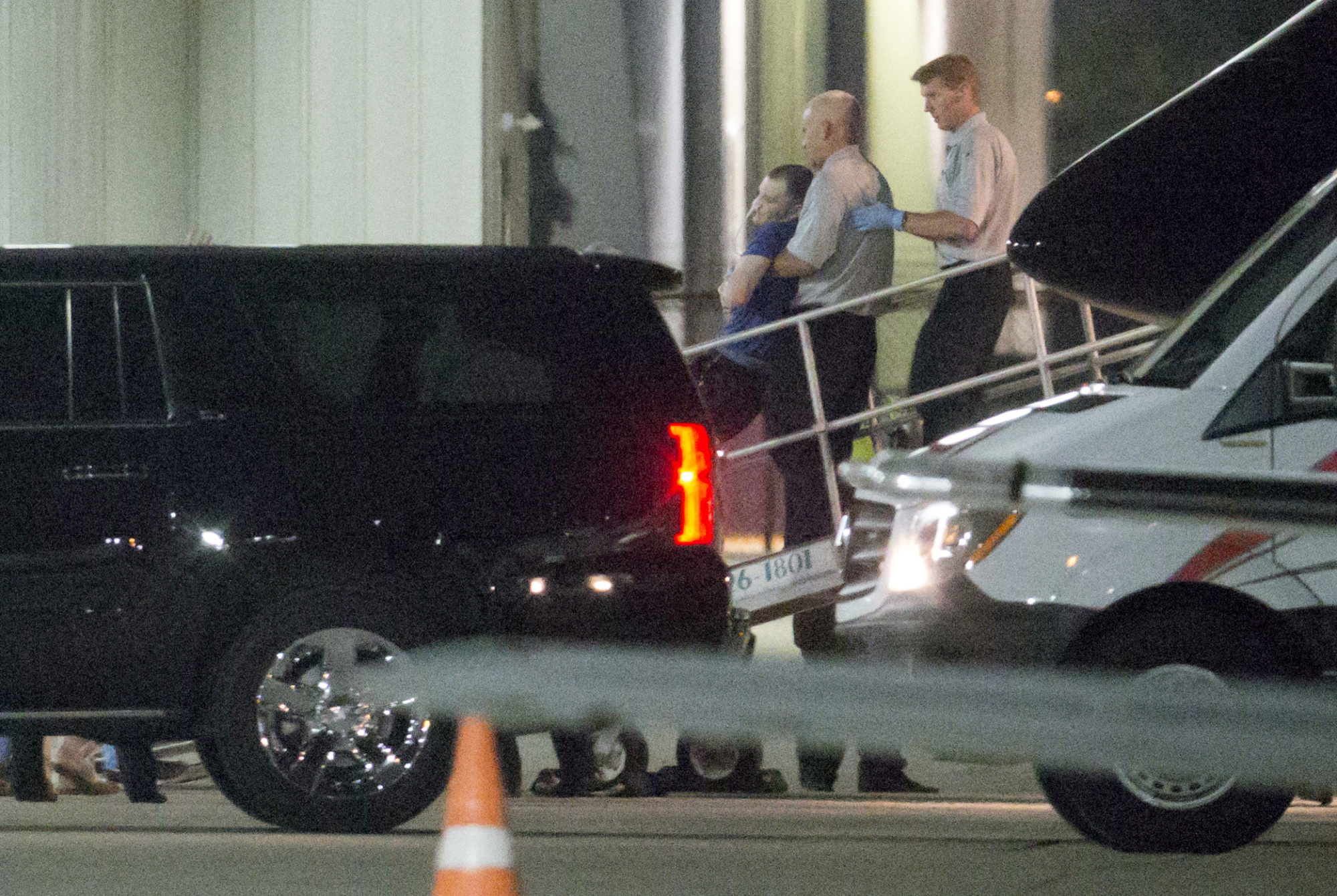
Lest We Forget: Haunting Image of Otto Warmbier Demands Action Against North Korean Regime

By Abraham Cooper


Rabbi Abraham Cooper is Associate Dean of the Simon Wiesenthal Center and a Board Member of the Committee for Human Rights in North Korea. 


(Image Credit: Japan Times)

“One death is a tragedy, a million deaths a statistic” is a quote attributed to the late Soviet dictator and 20th century mass murderer par excellence, Josef Stalin.

Today, even in our overloaded social media world, it is still true that a single image can sometimes awaken our auto-pilot apathy.

One such image was the sight of a catatonic 22 year-old dumped on America’s doorstep by the brutal North Korean regime just days before Otto Warmbier battered brain stopped functioning altogether.

The North Korean regime arrested young Warmbier for allegedly stealing a poster, sentenced him to 15 years of hard labor and returned a shell of a person—unable to communicate—to die.

But Americans would be wrong to assume that Warmbier’s death was “a senseless act of violence.” Or that he was released as a humanitarian gesture. It wasn’t. It was murder. The North Koreans put him in a coma, hid that fact for over a year and then sent back the destroyed young man so he wouldn’t die on their watch.

Rather than avert our eyes from this brutal episode and unspeakable crime, we’d best be paying close attention to what happened and drawing necessary conclusions:

Why was this young American arrested and brutalized? 

First, is because the North Korean regime hates America and Americans.

As long-time observer of North Korea, Joshua Stanton observed:
“Pyongyang has made the hatred of Americans a national virtue. It indoctrinates its little children to hate us. All that prevents it from murdering us on a greater scale is that it still lacks the means to do so.”

Secondly, for North Korea, apparently there is an empowering nexus between the arrest, incarceration and brutalization of helpless Americans like Wambier, and Pyongyang’s escalating missile and nuclear provocations targeting and taunting the US and her allies. Punishing an American citizen for the crimes—alleged or real—of the United States government is a perfectly legitimate response in Kim Jong-un’s warped world. In his mind there are zero degrees of separation between the government of the US and its citizens.

Clearly, no American, whatever their political beliefs, should venture into North Korea until there is a regime change.

Third, as we grieve with and for the Warmbier family we should know that millions of unknown North Koreans are similarly subjected to the brutality of Kim Jong-un’s regime. More than 100,000 men, women and children are being tortured, starved, and abused in North Korea’s political prison camps. This continuing outrage demands international action; not only tougher sanctions, but also a serious effort to help uncover and disclose the truth about the regime’s unspeakable crimes against its own people.

Fourth, the viciousness of Kim’s regime underscores the very real threat posed to the world by a nuclearized North Korea, capable of launching missiles at the US, South Korea, and Japan. For if Kim Jong-un and his lackeys murder their own people, they will have no compunction in mass-murdering our people.

Finally, we shouldn’t be surprised or fooled by North Korea denying that they are responsible for Otto Warmbier’s death. Such tactics were deployed by 20th Century tyrants like Stalin.

But is important for new generations in the 21st century that there will always be those among us who lack to courage to call evil out even when its victims are dumped on our doorstep. Instead they will blame the victim, boldly declaring that young Otto Warmbier got what he deserved,” perhaps because he was too “white” or maybe even a Zionist spy.”

To remember Otto Warmbier and to ensure his brutal death is not forgotten, we should support the dedicated activists and NGOs who strive against all odds to inform, persuade, and inspire leaders of civilized nations to take action against the regime in Pyongyang. A single death has forced us to confront North Korea’s challenge to global security and human decency. At a time when bipartisanship is virtually extinct in Washington, every member of the US Senate and House of Representatives should take one last look at Otto Warmbier's picture. Republicans and Democrats alike should reach across the aisle and foster bipartisan support for the millions of faceless, nameless North Korean victims, by elevating the importance of their forgotten human rights, on equal footing with the Administration’s efforts to counter Pyongyang’s burgeoning nuclear threat.

June 21, 2017

Former UN COI Chair Kirby on the Death of Otto Warmbier

By The Honorable Michael Kirby


The Honorable Michael Kirby is the former chair of the United Nations Commission of Inquiry on Human Rights in the Democratic People's Republic of Korea.

SYDNEY INSTITUTE 

SYDNEY, 21 JUNE 2017 

BEYOND THE TRAGEDY OF OTTO WARMBIER

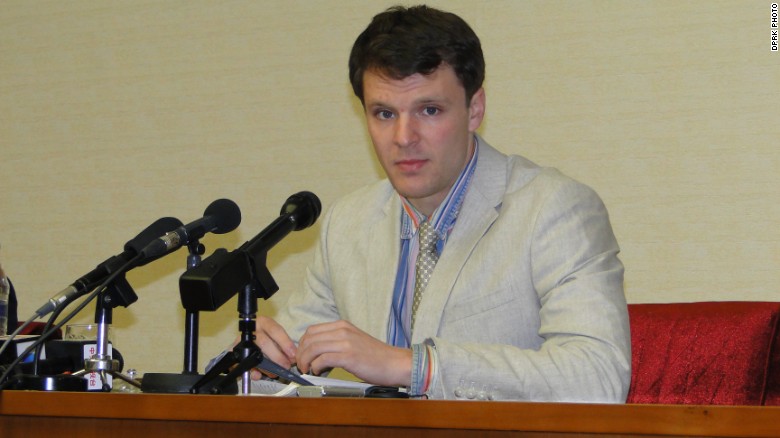
Image Credit: CNN

This week the family of Otto Warmbier announced, in their polite, understated American way, “It is our sad duty to report that our son has completed his journey home. Otto died today at 2pm.”

The apparently healthy, well-nourished American university student from Wyoming, Ohio, made a fateful decision in China at the end of 2015. Instead of returning directly to his studies at the University of Virginia, he signed up for a short trip to the ‘hermit kingdom.’ His idea was to spend the New Year break in North Korea. During his stay at a Pyongyang hotel, he entered a staff room which was off bounds. He removed a propaganda banner that lauded the achievements of the Korean Workers’ Party and proclaimed undying loyalty to the ‘Great Leader,’ Kim Jong-un.

This act, doubtless conceived as a cheeky gesture, was not perceived that way by the North Korean authorities. The young Otto was arrested and separated from his group who left for home. He began his journey into grossly excessive punishment. He was tried and obliged to tender abject apologies. He was sentenced to 15 years hard labour. He joined other, mostly American, prisoners whose extreme punishments were probably designed to serve as inducements for outlandish concessions and to signify humiliation and submission. During 18 months of detention something happened that plunged Otto into an unresponsive coma. A deal was struck last week to return the comatose prisoner to his family. Wyoming, Ohio welcomed him back. But he died without recovering responsiveness. Otto Warmbier was foolish in the way that young people can sometimes be. But his jailers were brutal, secretive and neglectful. His ‘punishment’ was totally disproportionate. Proportion and moderation are features of universal human rights and democratic politics. They are not features of the society of North Korea that the young Otto so offhandedly decided to visit as a New Year lark. The tour company has now cancelled tours for Americans. The family condemn what they see as the wrong done to their son by North Korea. The world looks on and draws its conclusions.

In May 2013, I was appointed to chair a UN commission of inquiry on human rights violations in North Korea. Nothing in my previous 35 years as a judge in Australia had prepared me for the ‘systematic, widespread and gross human rights violations’ that were disclosed in the evidence about the conditions in that country. We were denied entry by the regime. We never expected that they would submit themselves to close up inspection. However, we had no problem gathering reliable and convincing evidence. More than 30,000 North Korean refugees are now living in South Korea where they have a constitutional right to citizenship. In understated public testimony, available online, many of them came forward to tell a horror story of what is going on in their country.

North Korea is a land of ceaseless propaganda. Of torture and inhuman treatment. Of arbitrary arrest and detention. Of public executions to which school children are brought to look and to learn what happens to state enemies. Detention camps exist where family members must join the accused so as to rid society of their contagion. It is a place where freedom of movement is strictly controlled. Where Korean, Japanese and other nationals have been abducted to serve the purposes of the Kim dynasty. Where starvation of thousands is a recurring nightmare because of the failures of the economic system, a left-over of the world’s last Stalinist society.

North Korea rejects the evidence and findings of the UN inquiry about the gulags containing the ‘hostile class’. Yet they reject UN demands to permit inspectors to examine the places we can identify. Satellite images confirm the testimony provided by our witnesses. In today’s world it is less easy than once it was to hide widespread wrongdoing.

After the UN report was delivered to the Human Rights Council in March 2014, it was impossible to deny, with any conviction, the serious state of affairs in North Korea. According to our findings ‘the gravity, scale and nature of these violations reveal a State that does not have any parallel in the contemporary world.’ It is ‘a totalitarian State: a State that does not content itself with ensuring the authoritarian rule of a small group of people, but seeks to dominate every aspect of its citizens’ lives and terrorises them from within.’

The young Otto Warmbier had been specifically told by the tour company that he should not go into staff quarters in his hotel. He had been warned of the hyper-sensitivity of North Korea’s leadership to slights and to challenges to their leadership. Perhaps, as in his own country, that was just the challenge he needed to make his sudden, gesture to pilfer the propaganda symbol. But North Korea is a pitiless place. Especially so for uppity, well-fed American tourists. What he was not counting on was the pervasiveness of surveillance and the subordination of elite hotel employees to loyalty to their Leader.

Young Otto did not suffer detention in the political camps. His fate was incarceration in the ordinary prison system of the country. If, before setting out to Pyongyang, he had read the report of the UN commission on North Korea, he would have learned of the findings of grossly inhumane acts committed there against ordinary prisoners. Of extermination and murder, torture, rape and other grave sexual violence happening in the prisons. Of conditions similar to enslavement which persist behind prison walls. Of shocking shortages of food and hygiene. And the crimes against humanity that are a feature of daily life in North Korea. Had he read our report, he might have thought twice about going to such a country to celebrate the New Year. And if he had gone, he would have been aware of the brutality that attends trivial infractions, especially by foreigners, particularly by Americans. But he was just a high spirited student with his life ahead of him. Suddenly by an act he would have regarded as harmless, he became a dispensable pawn in a great international chess game.

A seemingly minor player on the geographical chess board (North Korea) has suddenly aspired to be a King. Despite comparative poverty and disadvantage it has developed nuclear warheads. It has tested sophisticated missiles. It has experimented with submarine launching facilities that will allow it to threaten more than its neighbours. The established players in the game do not seem to know how to declare checkmate to this new would-be King. A tiny pawn, like Otto Warmbier, can quite easily be removed from the game, and even from life. When and how the young Otto’s brain damage first occurred may never be known. Like much else about North Korea, it is shrouded in obsessive secrecy and mystery. Perhaps this is what intrigued Otto and caused him to take his fateful decision.

How should we remember Otto Warmbier from Ohio? His plight should draw our attention to the sufferings of an entire people subjected in North Korea to daily acts of fearsome disproportion and violence. Accidently perhaps, Otto’s incarceration, coma, removal and death, once again, call to notice the sufferings of the other prisoners, languishing in the jails of North Korea. A young American’s fate becomes a metaphor, a kind of symbol, of a big story about thousands of nameless statistics locked up and oppressed in North Korea. They are voiceless. But Otto Warmbier speaks of their suffering from his grave. He reminds the world of the human rights wrongs in North Korea. He joins the voices of the many witnesses who gave testimony to the UN commission.

The young Otto never woke from his coma to tell of his ordeal. Still the image of this healthy, strapping American student, joyfully speaking at his high school graduation on YouTube, is a reminder of all the other victims who remain behind. They are locked up in their prisons, their detention camps and elsewhere behind the DMZ in the closed society that is North Korea. They will remain locked up in that silence until the United Nations and the world community respond effectively to the UN Commission report.

In 1945, the world promised that never again would it turn away from crimes against humanity. That promise has not yet been delivered. We owe it to Otto Warmbier, but also to the people of North Korea who still live in the shadows, to deliver on the promise. The development of nuclear weapons in North Korea makes fidelity to the promise more difficult. But also more important and more urgent. The boy from Wyoming, Ohio tells the world that it should act. But will it? Can it? That is the puzzle left to humanity by the life and death of Otto Warmbier.